
Tattoo regret is more common than many people realize. Whether your old tattoo has faded poorly, represents a past relationship, reflects outdated tastes, or simply wasn’t executed well, cover up tattoos offer a transformative solution. Rather than living with unwanted ink or undergoing expensive laser removal, cover up tattoos allow you to reimagine that space with fresh, meaningful artwork. This comprehensive guide explores everything you need to know about cover up tattoos to achieve beautiful results that you’ll love for years to come.
Understanding Cover Up Tattoos
A cover up tattoo is a new tattoo design strategically placed over an existing tattoo to conceal or transform the original ink. Unlike fresh tattoos on clean skin, cover ups require specialized techniques, careful planning, and artistic skill to effectively hide the previous design while creating beautiful new artwork.
The fundamental challenge of cover up tattoos lies in working with what’s already there. The old tattoo’s ink remains in your skin permanently, so the new design must account for those existing pigments. Dark areas of the old tattoo need darker ink in the new design to effectively conceal them, which influences design choices, color palettes, and artistic approaches.
Successful cover ups require collaboration between you and a skilled tattoo artist experienced in this specialized work. Not all tattoo artists excel at cover ups, as this work demands additional expertise in color theory, design strategy, and technical execution beyond standard tattooing skills.
What Makes a Good Cover Up Tattoo
Strategic Design Elements
Effective cover up designs incorporate specific elements that help conceal the original tattoo. Bold, high-contrast designs with areas of solid black or dark shading work best for covering old ink. The new design typically needs to be larger than the original tattoo, extending beyond its borders to create clean edges and complete coverage.
Designs with natural variation in darkness, like florals with dense centers and delicate petals, mandalas with intricate patterns, or realistic designs with shadows and highlights, effectively hide inconsistent pigmentation from old tattoos. These elements provide artistic justification for dark areas needed to cover the original ink.
Color Considerations
Dark colors cover more effectively than light colors. Black, dark blue, dark green, and deep purple can successfully cover most old tattoos. While lighter colors like yellow, pink, or light blue add beautiful accents, they cannot cover dark ink on their own and work only in areas where the old tattoo is light or absent.
Color cover ups are possible but require careful planning. The old tattoo’s colors interact with new pigments, potentially creating unexpected results. Experienced cover up artists understand color theory and can predict how combining old and new inks will affect the final appearance.
Size and Placement
Cover up tattoos almost always need to be larger than the original tattoo. This increased size allows the artist to extend the design beyond the old ink’s boundaries, creating clean transitions and complete coverage. Expect your cover up to be at least 1.5 to 2 times larger than the original tattoo.
The design must strategically place the darkest elements over the darkest parts of the old tattoo. This may influence composition, orientation, and overall layout. Skilled artists work within these constraints while maintaining aesthetic appeal and proper proportions.
Types of Tattoos That Cover Well
Blackwork and Black and Grey Designs
Solid black designs, heavy black and grey work, and blackout tattoos (solid black coverage) represent the most reliable cover up options. These approaches use dense black ink that effectively conceals virtually any underlying tattoo, regardless of its darkness or colors.
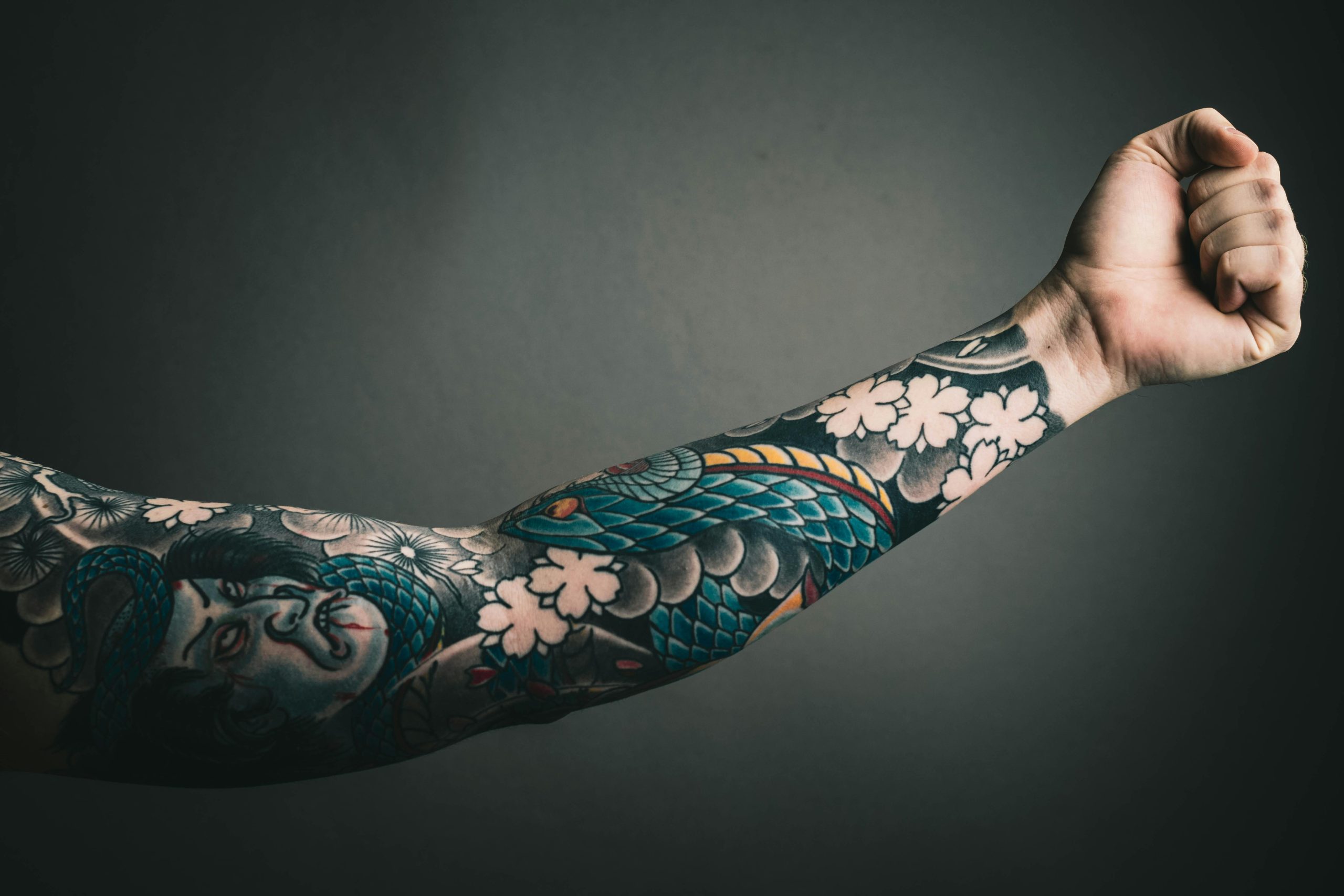
Geometric patterns with bold black lines, blackwork illustrations, and ornamental designs excel at cover ups because their style naturally incorporates the heavy ink coverage needed to hide old tattoos. Japanese traditional work, with its bold outlines and solid black backgrounds, also covers extremely well.
Floral Designs
Floral tattoos rank among the most popular and effective cover up choices. Flowers naturally incorporate dense centers, overlapping petals, leaves, and stems that create varying levels of darkness throughout the design. Roses, peonies, lotus flowers, and chrysanthemums work particularly well for cover ups.
The organic, flowing nature of floral designs allows artists to work around the old tattoo’s shape while maintaining natural-looking composition. Dark foliage, shadows, and background elements provide coverage while lighter petals and highlights add dimension and beauty.
Mandala and Geometric Patterns
Mandalas, with their intricate patterns radiating from a central point, effectively cover old tattoos by incorporating the existing ink into their complex design. The repetitive geometric elements, varying line weights, and areas of dense pattern work create natural opportunities for strategic coverage.
Sacred geometry, dotwork mandalas, and ornamental patterns use controlled repetition and precise placement to transform unwanted tattoos into stunning new artwork. These designs appeal to people seeking meaningful symbolism combined with aesthetic beauty.
Realistic and Portrait Work
Realistic tattoos utilizing strong contrast, deep shadows, and dramatic lighting can successfully cover old tattoos when executed by skilled artists. Animal portraits, nature scenes, and realistic imagery use natural shadows and dark areas to conceal underlying ink while creating stunning visual impact.
However, realistic work requires exceptional skill for cover ups. The artist must maintain proper proportions, realistic shading, and anatomical accuracy while working around existing pigmentation. This complexity demands extensive experience and artistic expertise.
Japanese Traditional
Traditional Japanese tattooing excels at cover ups due to its bold outlines, solid black backgrounds, rich colors, and large-scale compositions. Dragons, koi fish, phoenixes, tigers, and waves incorporate the heavy coverage needed while maintaining the style’s distinctive aesthetic.
The cultural tradition of large-scale Japanese bodywork naturally accommodates the size increase typically needed for effective cover ups. Background elements like clouds, wind bars, and water provide strategic coverage while enhancing the main subject.
Types of Tattoos That Are Difficult to Cover
Solid Black Tattoos
Large areas of solid black ink present the greatest cover up challenge. Black is the darkest pigment available, meaning you cannot go darker to cover it. Options include incorporating the black into the new design, using it as a shadow or background element, or considering laser lightening before the cover up.
Tribal tattoos with extensive solid black areas often require creative solutions. Some people choose to extend the black into a larger blackwork piece or Japanese background. Others opt for laser sessions to lighten the black before covering with a new design.
Very Dark or Dense Tattoos
Heavily saturated tattoos with dense, dark coverage throughout limit cover up options. The new design must be darker overall, resulting in a predominantly dark tattoo. While beautiful dark tattoos exist, this may not suit everyone’s preferences.
Multiple overlapping cover ups (a cover up of a cover up) become increasingly difficult as ink density accumulates. Each layer of ink makes the skin darker, eventually limiting further cover up possibilities.
Large, Well-Executed Tattoos
Ironically, well-executed tattoos with bold lines, strong saturation, and quality ink coverage present greater cover up challenges than faded, poorly done work. Good ink holds better and appears darker, requiring more strategic planning to cover effectively.
Large tattoos naturally need even larger cover ups. A poorly placed large tattoo may severely limit body positioning options for the cover up design, sometimes requiring extension onto adjacent body areas.
Scars and Textured Skin
Tattoos over scarred skin, whether from the original tattoo, poor healing, or other causes, complicate cover ups. Scar tissue doesn’t hold ink consistently, potentially creating uneven coverage. Raised scars may remain visible even under new ink.
While experienced artists can work with scarred skin, expectations must be realistic. Some texture may remain visible, and additional sessions might be needed to achieve even coverage.
The Cover Up Process
Initial Consultation
The cover up process begins with a consultation with an experienced cover up artist. Bring clear photos of your existing tattoo from multiple angles and in good lighting. Discuss what you dislike about the current tattoo, your style preferences for the new design, and any specific elements you’d like incorporated.
The artist will assess your tattoo’s size, darkness, colors, and location to determine cover up feasibility and appropriate design approaches. They’ll explain realistic expectations, discuss size requirements, suggest style options, and may recommend laser lightening if needed for your desired outcome.
This consultation should feel collaborative, with the artist listening to your preferences while providing professional guidance. Trust your instincts—if an artist seems dismissive, promises unrealistic results, or doesn’t specialize in cover ups, continue searching.
Design Development
After your consultation, the artist creates a custom design specifically planned to cover your existing tattoo. This process takes time, sometimes requiring multiple design revisions to achieve the perfect balance between your vision and technical coverage requirements.
Quality cover up artists often charge design fees separate from tattooing costs, reflecting the significant time spent planning effective coverage. This investment ensures your cover up succeeds rather than becoming another regrettable tattoo.
Review designs carefully, considering how dark elements align with your old tattoo’s darkest areas. Ask questions about coverage strategy, color choices, and any concerns you have. Good artists welcome questions and want you to feel confident before proceeding.
Laser Lightening Option
For very dark tattoos or when you desire a lighter cover up design, laser tattoo removal sessions before covering up can expand your options. Partial removal lightens the existing tattoo enough that lighter cover up designs become viable.
Typically, 2-4 laser sessions sufficiently lighten tattoos for cover up purposes, much less time and money than complete removal requires. The lightened tattoo still needs covering but allows more design flexibility, particularly with color and overall darkness.
Laser lightening requires healing time between sessions and before tattooing—usually 6-8 weeks between laser treatments and 8-12 weeks from the final laser session to cover up tattooing. Plan accordingly for this extended timeline.
The Tattoo Session
Cover up sessions often take longer than equivalent-sized fresh tattoos because artists must work more carefully, layering ink strategically to achieve proper coverage. Larger cover ups may require multiple sessions to complete, especially for complex, detailed designs.
Pain levels vary by location and individual tolerance but are generally comparable to original tattoos. Some people report slightly increased sensitivity when tattooing over old ink, though this isn’t universal.
During the session, the artist may periodically wipe the area to assess coverage and adjust technique as needed. Trust their process—experienced cover up artists know how to build proper ink density for lasting results.
Healing and Touch-Ups
Cover up tattoos heal like any other tattoo, requiring 2-4 weeks for surface healing and several months for complete healing. Follow your artist’s aftercare instructions precisely to ensure optimal healing and color retention.
Touch-up sessions are more common with cover ups than fresh tattoos. Areas where old ink shows through may need additional passes once healing completes. Reputable artists typically include one touch-up session in their pricing, performed 6-8 weeks after the initial session.
Finding the Right Cover Up Artist
Experience and Specialization
Not all tattoo artists excel at cover ups. This specialized work requires additional skills in strategic design planning, color theory, and technical execution. When searching for artists, specifically look for those who advertise cover up expertise and showcase cover up work in their portfolios.
Examine before-and-after photos of their cover up work. Quality artists proudly display these transformations, showing both the original tattoo and healed cover up results. Assess whether they successfully conceal old tattoos while creating aesthetically pleasing new designs.
Portfolio Assessment
Review artists’ portfolios critically, focusing on work similar to what you want. Notice whether old tattoos remain visible in healed photos, whether designs look natural despite coverage requirements, and whether the overall quality meets professional standards.
Pay attention to line quality, color saturation, shading smoothness, and composition. Cover up work should match or exceed the quality of their standard tattoos while demonstrating the additional complexity of concealing old ink.
Consultation Quality
How an artist conducts consultations reveals much about their professionalism and expertise. Skilled cover up artists take time to understand your concerns, honestly assess feasibility, set realistic expectations, and explain their strategic approach.
Beware of artists who guarantee perfect coverage of any tattoo, promise unnaturally light cover ups over dark tattoos, rush through consultations without thorough assessment, or pressure you to commit before you’re comfortable.
Reviews and Reputation
Research artists through reviews, social media, and word-of-mouth recommendations. Happy clients share their experiences, while patterns of complaints about poor coverage, unprofessional behavior, or inferior quality warrant serious consideration.
Personal recommendations from people whose cover ups you’ve seen and admired provide valuable insights. Ask about their experience, the artist’s communication style, the process, and their satisfaction with results.
Cost Considerations
Quality cover up work costs more than equivalent-sized standard tattoos due to increased complexity, time, and expertise required. Expect to pay premium rates for experienced cover up specialists—typically 20-50% more than standard tattoo pricing.
While cost matters, prioritizing price over quality for cover up work often leads to disappointment. Another poorly executed tattoo only compounds your problem. Budget appropriately for quality work rather than seeking the cheapest option.
Cover Up Ideas by Original Tattoo Type
Covering Names
Name tattoos rank among the most commonly covered tattoos, especially ex-partner names. Effective strategies include incorporating the name into a larger design where individual letters disappear, covering with bold floral designs, using script or text elements where old letters blend in, or covering with solid blackwork or geometric patterns.
Popular cover up designs for names include roses and flowers, ornamental patterns, animals or creatures, landscapes or nature scenes, and abstract or geometric art. The name’s size, style, and location influence which approaches work best.
Covering Tribal Tattoos
Tribal tattoos, particularly solid black designs from the 1990s and early 2000s, commonly get covered. Their solid black areas require strategic handling, often by incorporating them into new designs as shadows, backgrounds, or negative space.
Effective tribal cover up options include Japanese traditional work with black backgrounds, large-scale floral designs with dark foliage, realistic animal portraits with dark fur, geometric blackwork expanding the tribal elements, and ornamental mandalas incorporating the existing shapes.
Covering Small, Poorly Executed Tattoos
Small, amateur, or poorly executed tattoos offer the most cover up flexibility. Their limited size and often lighter ink allow for numerous design options without requiring massive new tattoos.
These tattoos can be covered with moderately sized florals, small to medium animals or creatures, geometric patterns, ornamental designs, or incorporated into larger sleeve or back pieces. The relative ease of covering these tattoos means you can prioritize design preference over coverage constraints.
Covering Faded Old Tattoos
Faded tattoos actually cover more easily than fresh, vibrant ink. Years of sun exposure, aging, and natural fading lighten ink, creating opportunities for lighter cover up designs than freshly saturated tattoos would allow.
Nearly any design style works for significantly faded tattoos, giving you maximum creative freedom. The challenge becomes ensuring the cover up itself uses quality ink and technique to avoid repeating the fading cycle.
Color Theory in Cover Up Tattoos
Understanding Color Interaction
When new tattoo ink layers over old ink, the colors combine rather than completely replacing what’s beneath. Understanding basic color mixing helps set realistic expectations. Blue over yellow creates green, red over blue creates purple, and black over any color creates darker versions of that color.
This color interaction means you cannot put light colors over dark colors and expect the light color to show. Light pink over black will appear dark purple or invisible. Light blue over dark green won’t show blue but rather a slightly different shade of dark green.
Strategic Color Selection
Experienced cover up artists select colors strategically, using the old tattoo’s existing colors to their advantage when possible. They place darker colors over the darkest areas and reserve lighter colors for areas with minimal underlying ink.
Complementary colors can neutralize unwanted tones. For example, green tones can neutralize red ink, while purple tones can neutralize yellow. However, this requires careful calculation and extensive color theory knowledge.
Monochromatic Approaches
Black and grey cover ups avoid color interaction complications entirely, relying on value (darkness) alone for coverage. This reliable approach works for nearly any old tattoo and creates timeless, classic results.
Many people prefer black and grey cover ups for their versatility, aging characteristics, and the way they complement any wardrobe or style without color commitment.
Realistic Expectations for Cover Ups
What Cover Ups Can Achieve
Well-executed cover ups can completely transform unwanted tattoos into beautiful artwork you’re proud to wear. The old tattoo becomes invisible or nearly so, replaced by your chosen design. From across a room or in photos, quality cover ups look like any other great tattoo.
Cover ups restore your confidence and remove the daily reminder of tattoo regret. They demonstrate that mistakes can be corrected and past decisions don’t permanently limit your self-expression.
What Cover Ups Cannot Achieve
Even the best cover ups have limitations. Upon extremely close inspection, some hint of the old tattoo may remain visible, particularly in specific lighting or to someone who knows where to look. This varies based on the original tattoo’s darkness, the new design’s strategy, and the artist’s skill.
Cover ups cannot make skin look as if it was never tattooed. The new tattoo occupies that space, and typically a darker one than might have been chosen for blank skin. Complete erasure requires laser removal, not covering.
Unrealistic expectations lead to disappointment. Understand that cover ups solve tattoo regret by replacing unwanted tattoos with desired artwork, not by returning skin to its original blank state.
Long-Term Considerations
Consider how your cover up will age. Like all tattoos, cover ups fade over time with sun exposure and natural aging. However, because cover ups often use heavier ink saturation for proper coverage, they may hold up well over decades.
Touch-ups every 10-15 years can refresh colors and maintain coverage, similar to maintenance for any quality tattoo. Protecting your cover up with sunscreen and proper care ensures it continues looking great for life.
Alternative Options to Cover Ups
Laser Tattoo Removal
Complete laser tattoo removal offers the alternative of removing unwanted tattoos entirely rather than covering them. Multiple sessions (typically 6-12 or more) gradually break down tattoo ink, which your body eliminates naturally.
Laser removal costs significantly more than cover ups and requires longer time commitment but results in clear skin rather than a new tattoo. This option suits people who want that particular body area to remain untattooed or who desire maximum flexibility for future tattoos.
Tattoo Modification
Rather than completely covering a tattoo, modification adds to or alters the existing design to create something you like better. This approach works when the original tattoo isn’t fundamentally flawed but needs updating, improving, or incorporating into a larger piece.
Skilled artists can add elements, rework lines, introduce color, or extend designs to transform mediocre tattoos into quality artwork. This option often requires less coverage strategy than complete cover ups while achieving satisfying results.
Incorporation into Larger Pieces
Rather than hiding your old tattoo, consider incorporating it into a much larger piece where it becomes one element among many. Sleeve designs, back pieces, or chest panels can strategically integrate existing tattoos while adding substantial new artwork.
This approach acknowledges your tattoo history while moving forward with new artistic expression. The old tattoo remains visible but becomes part of a larger composition that represents your journey.
Temporary Concealment
For situations requiring temporary concealment—job interviews, weddings, formal events—specialized tattoo cover-up makeup provides effective short-term solutions. Products like Dermablend, Kat Von D Lock-It, or Dermaflage create opaque coverage that conceals tattoos for hours.
This option suits people who usually like their tattoos but occasionally need professional appearance or want to test how they’d feel without visible ink before committing to removal or cover ups.
Cost of Cover Up Tattoos
Pricing Factors
Cover up tattoo costs vary based on numerous factors including size, complexity, original tattoo darkness, artist experience and reputation, geographic location, and whether laser lightening precedes the cover up.
Small cover ups might start around $200-500, medium-sized pieces range from $500-1500, and large cover ups often exceed $2000-5000 or more. Complex cover ups requiring multiple sessions increase costs accordingly.
Comparing Cover Up to Removal Costs
Cover up tattoos typically cost less than complete laser removal. While cover ups might range from a few hundred to several thousand dollars depending on size, complete laser removal often costs $2000-10,000+ over many sessions spanning years.
However, partial laser lightening before covering (2-4 sessions) adds $400-1200 to total cover up costs while expanding design options. This combined approach balances cost, timeline, and results.
Investment Perspective
View cover up costs as investing in your confidence and daily comfort. Living with regretted tattoos creates ongoing emotional burden, while quality cover ups eliminate that distress permanently.
Attempting to save money with inexperienced artists or rushing the process often results in another unwanted tattoo—potentially even harder to cover than the original. Budgeting appropriately for quality work prevents compounding problems.
Aftercare for Cover Up Tattoos
Initial Healing Phase
Cover up aftercare follows the same principles as any tattoo. Keep the area clean with gentle, fragrance-free soap, apply thin layers of recommended ointment or lotion, avoid soaking (no swimming, baths, or hot tubs), protect from sun exposure, and resist picking at scabs or peeling skin.
Cover ups may produce more intense initial redness or swelling due to heavier ink saturation required for coverage. This is normal and should subside within a few days like any tattoo.
Long-Term Care
After initial healing, protect your cover up from sun exposure with high-SPF sunscreen. UV rays fade tattoos faster than any other factor, and maintaining your cover up’s darkness ensures the old tattoo stays hidden.
Moisturize regularly to keep skin healthy and support vibrant ink. Well-hydrated skin showcases tattoos better than dry, dull skin. Quality body lotion maintains both skin health and tattoo appearance.
Touch-Up Timing
Schedule touch-up sessions after complete healing, typically 6-8 weeks after the initial tattoo. The artist assesses healed coverage and adds ink to any areas where the old tattoo shows through or where coverage needs strengthening.
Some cover ups require multiple sessions regardless of healing, particularly large or complex pieces. Discuss expectations with your artist during initial consultation so you budget time and money appropriately.
Frequently Asked Questions
Can any tattoo be covered up?
Most tattoos can be covered up with appropriate design strategies, though some present greater challenges than others. Very dark, densely saturated tattoos or large solid black areas are hardest to cover but not impossible. The cover up design must be significantly darker than the original and typically larger. For extremely difficult tattoos, laser lightening sessions before the cover up expand design options. An experienced cover up artist can assess your specific tattoo and recommend the best approach.
How much does a cover up tattoo cost?
Cover up tattoo costs vary widely based on size, complexity, location, and artist experience. Small cover ups typically range from $200-$500, medium pieces cost $500-$1,500, and large cover ups often run $2,000-$5,000 or more. Complex designs requiring multiple sessions increase costs. Cover ups generally cost 20-50% more than equivalent-sized fresh tattoos due to increased difficulty and planning required. Rates vary significantly by geographic location and artist reputation.
How long do I have to wait to cover up a tattoo?
New tattoos should be fully healed before covering, typically 3-6 months after initial tattooing. This allows complete skin healing and ink settling. For old tattoos, you can get cover ups whenever you’re ready—there’s no waiting period. If you’ve had laser removal sessions, wait 8-12 weeks after the final treatment before tattooing to ensure complete healing. Your cover up artist can assess whether your skin is ready during consultation.
Do cover up tattoos hurt more than regular tattoos?
Cover up tattoos generally hurt about the same as regular tattoos in the same location. Some people report slightly increased sensitivity when tattooing over old ink, though this isn’t universal. Pain depends primarily on body location, your pain tolerance, session length, and tattoo technique rather than whether it’s a cover up. Sessions may run longer than equivalent-sized fresh tattoos because artists work more carefully to achieve proper coverage, which extends time in the chair.
Can you cover a black tattoo with color?
Covering solid black tattoos with lighter colors is extremely difficult and often impossible. Black is the darkest pigment, so you cannot go darker to cover it. However, black can be incorporated into a colorful design as shadows, outlines, or background elements. For cover ups emphasizing color, laser lightening sessions beforehand lighten the black enough that colors show effectively. Many colorful cover ups use black strategically within the design rather than trying to cover it completely with lighter hues.
What designs work best for cover up tattoos?
Designs with strategic darkness variation work best for cover ups. Effective options include floral designs with dense centers and leaves, mandalas and geometric patterns with intricate detail, Japanese traditional with bold outlines and backgrounds, realistic work with strong shadows and contrast, and blackwork or heavy black and grey designs. These styles naturally incorporate the dark elements needed to conceal old tattoos while creating beautiful artwork. Your artist will recommend designs appropriate for your specific situation.
How do I find a good cover up tattoo artist?
Find quality cover up artists by searching portfolios specifically for cover up work with before-and-after photos, reading reviews focusing on cover up experience, seeking recommendations from people whose cover ups you admire, and scheduling consultations to assess expertise and communication style. Look for artists who honestly assess your tattoo, set realistic expectations, demonstrate strategic thinking about coverage, and specialize in cover ups rather than attempting them occasionally. Don’t choose based solely on price—quality matters significantly for cover up success.
Can you cover up a cover up tattoo?
Yes, you can cover up a cover up tattoo, though it becomes increasingly challenging with each layer. Each cover up adds more ink, making the area progressively darker and limiting future options. Second cover ups require even darker designs than the first cover up, often necessitating predominantly black work. After multiple cover ups, laser removal may be the only option for further changes. For this reason, invest time and money in getting your cover up right the first time rather than rushing into another regrettable tattoo.
Should I get laser removal before a cover up?
Laser removal before covering up isn’t always necessary but can significantly expand your design options. Consider laser lightening if you want a lighter or more colorful cover up than the old tattoo’s darkness would allow, if the old tattoo is very dark or heavily saturated, or if you want maximum flexibility in design choice. Typically 2-4 laser sessions sufficiently lighten tattoos for cover up purposes, much less than complete removal requires. Discuss this option with your cover up artist during consultation.
How dark will my cover up tattoo be?
Cover up darkness depends on your original tattoo and chosen design. Generally, cover ups must be darker than the original tattoo, particularly over the darkest areas. Very dark old tattoos result in predominantly dark cover ups. Lighter or significantly faded old tattoos allow lighter cover up options. Laser lightening before covering up reduces required darkness in the new design. Your artist will show you reference photos of similar cover ups to set realistic expectations about final darkness before you commit.
What’s the best way to cover up a name tattoo?
Name tattoos cover well with several strategies: floral designs where petals and leaves obscure letters, ornamental or geometric patterns where text disappears into intricate detail, larger script or text designs that incorporate old letters, animals or portraits where strategic shading covers the name, or blackwork that completely conceals the text. The name’s size, location, and style influence which approach works best. Small names offer maximum flexibility, while large bold names require more strategic planning.
Can cover up tattoos fade and show the old tattoo?
Quality cover up tattoos properly executed and maintained should not show the old tattoo as they fade. However, if insufficient ink was used, if coverage strategy was inadequate, or if extreme sun damage occurs, some hint of the old tattoo might become visible over many years. This is why choosing experienced cover up artists matters—they understand proper ink density and strategic placement for lasting coverage. Protecting your cover up with sunscreen and scheduling touch-ups as needed maintains coverage indefinitely.
Conclusion
Cover up tattoos offer transformative solutions for unwanted ink, replacing regret with artwork you’ll love wearing every day. While covering tattoos requires more planning, strategic thinking, and expertise than fresh tattoos on clean skin, the results can be truly spectacular when executed by skilled artists.
Success starts with realistic expectations about what cover ups can achieve, finding experienced artists who specialize in this demanding work, and investing appropriately in quality design and execution. The consultation process is crucial—take time to find the right artist, develop the perfect design, and ensure you feel confident before proceeding.
Whether you’re covering a youthful mistake, an ex-partner’s name, a faded old tattoo, or simply artwork that no longer reflects who you are, cover up tattoos prove that past decisions need not permanently limit your self-expression. With proper planning, skilled execution, and appropriate care, your cover up can become one of your favorite tattoos—transforming a source of regret into artwork you’re genuinely proud to wear.
The journey from unwanted tattoo to beautiful cover up represents personal growth, artistic collaboration, and the empowering realization that we can rewrite our stories. Your skin tells your life’s narrative, and cover ups are simply a new chapter—one that’s entirely yours to author.