

More than 4 million Americans miss or delay critical healthcare appointments every year due to lack of adequate transportation. This staggering reality presents both a significant social challenge and an exceptional business opportunity. For entrepreneurs seeking to make a meaningful impact while building a profitable enterprise, how to start a medical transportation business—specifically a Non-Emergency Medical Transportation (NEMT) company—offers tremendous potential in one of healthcare’s fastest-growing sectors.
The medical transportation market generated $9.16 billion in 2024 and is expected to reach $10.22 billion in 2025, driven by an aging population, rising chronic health conditions, and increasing healthcare transportation needs. The NEMT market was worth $8.86 billion in 2023 and is projected to grow to $9.72 billion by 2024 with a 9.7% yearly growth rate, reaching $13.31 billion by 2028 with an 8.2% annual growth.
This comprehensive guide walks you through every essential step of launching your medical transportation business, from initial market research and legal requirements to fleet selection and client acquisition strategies. Whether you’re a transportation professional looking to start your own venture or an entrepreneur seeking a purpose-driven business opportunity, this guide provides the practical knowledge you need to succeed.
Understanding the Medical Transportation Industry
Before diving into the operational details, it’s crucial to understand what medical transportation encompasses and why it represents such a significant opportunity.
What is Medical Transportation?
Medical transportation services help patients travel to and from healthcare facilities. These services can be divided into three primary categories: non-emergency medical transportation (NEMT) for patients requiring assistance to non-urgent appointments like checkups, physical therapy, or dialysis; emergency medical services (EMS) for critical situations requiring immediate medical attention; and ambulatory services for patients who can walk but need safe transportation assistance.
Non-Emergency Medical Transportation is a service provided to people who need to get to and from medical appointments but do not require an ambulance, including regular van service for ambulatory patients and stretcher vans for those requiring medical monitoring during transit.
For most entrepreneurs, NEMT represents the most accessible entry point. Starting a NEMT business has nothing to do with ambulances rushing to accident scenes and everything to do with helping people get the best treatment possible. Unlike emergency services that require extensive medical training and certifications, NEMT focuses on reliable, compassionate transportation for routine medical needs.
Market Demand and Growth Potential
The medical transportation industry is experiencing unprecedented growth driven by several powerful demographic and healthcare trends. The U.S. population aged 50 and older with at least one chronic illness is predicted to double by 2050, reaching over 142 million people, creating sustained demand for medical transportation services.
The aging population represents the primary growth driver. Seniors are more likely to need NEMT than younger people, requiring frequent trips to clinics or hospitals for routine checkups, therapy sessions, and treatments. California’s 65+ population is expected to grow 87% by 2030, driving NEMT demand significantly.
People with disabilities rely on accessible transport for medical appointments, while patients undergoing long-term treatments like dialysis or chemotherapy depend heavily on reliable medical transportation. Low-income or Medicaid beneficiaries also constitute a major customer segment.
The broader healthcare transportation market was valued at $46.07 billion in 2023 and is predicted to grow steadily at 8% per year, while the global patient transport services market is growing at an impressive 13% annually from 2022 to 2032.
Why Start a Medical Transportation Business?
For entrepreneurs considering entering this field, the benefits extend beyond strong market fundamentals. A growing industry with the non-emergency medical transportation sector experiencing rapid expansion provides a solid foundation for new entrants.
NEMT businesses can be quite lucrative due to constant demand for services, relatively low startup and operating costs, and high profit margins that allow premium rates for services. When starting small with a single vehicle, the startup budget can be as low as $4,000 to $5,000.
The business offers tremendous flexibility, allowing you to choose your hours and operate in any desired location. Most importantly, there’s the opportunity for professional satisfaction through providing essential services to those in need, helping vulnerable populations access healthcare, and making a tangible difference in people’s lives every day.
Step 1: Conduct Thorough Market Research
Success in medical transportation begins with understanding your local market dynamics, competition, and customer needs. Knowing exactly who your customers are is key to tailoring services and growing your business successfully.
Analyzing Local Demand
Start by examining your target market demographics. Look at who is actively using NEMT services—elderly individuals, disabled patients, people with chronic conditions, and low-income or Medicaid beneficiaries. Study industry reports, government data, and healthcare trends to identify demand patterns.
Check your area’s demographics including age groups, income levels, health facilities, and public transport infrastructure. Areas with limited public transportation and aging populations typically show highest demand. Identify underserved areas or patient needs that current services fail to meet adequately.
Understanding Your Customer Base
Draft detailed customer profiles considering demographics, geography, psychographics, and behavior. Your typical customers might include elderly individuals aged 65+ with mobility challenges, disabled individuals requiring wheelchair-accessible vehicles, chronic illness patients needing regular appointments like dialysis or chemotherapy, Medicaid beneficiaries entitled to transportation services, post-surgery patients requiring recovery transportation, and seniors without family support for medical appointments.
Understanding these segments helps you determine which services to offer, what vehicle types you need, and how to market your business effectively.
Competitive Analysis
Research existing NEMT providers in your area. Analyze their services, pricing, reputation, and coverage areas. Check who they’re catering to and identify gaps in service. Look for opportunities like underserved geographic areas, lack of specialized services (wheelchair accessible, stretcher transport), poor service quality creating dissatisfaction, or specific patient populations being neglected.
Visit competitor websites, read online reviews, and even call as a potential customer to understand their booking process and customer service quality. This intelligence helps you position your business competitively.
Identifying Strategic Locations
Selecting a strategic location is highly crucial for starting a medical transportation business. The right location will not only increase ride volume but also help secure contracts, streamline operations, and boost long-term profitability.
Consider proximity to major healthcare facilities like hospitals, dialysis centers, cancer treatment centers, rehabilitation facilities, and senior living communities. Areas with high concentrations of potential customers and healthcare destinations naturally generate more business.
Step 2: Create a Comprehensive Business Plan
Your business plan serves as both a roadmap for your operations and a tool for securing funding. It should clearly articulate your vision, strategy, and financial projections.
Essential Business Plan Components
A comprehensive business plan for your non-emergency medical transportation company should include an executive summary providing a snapshot of your mission and services, clear business goals defining short-term and long-term objectives, detailed financial projections including funding needs, revenue forecasts, and profit margins, market analysis demonstrating understanding of your target market and competition, service descriptions explaining exactly what you’ll offer, marketing and sales strategies, operational plans detailing daily business operations, and management structure outlining who will run the business.
Your business plan will include your business name, location, and purpose. You can’t afford to march into the unknown—this document forces you to think through every aspect of your venture before investing significant resources.
Financial Projections and Startup Costs
Starting a medical transportation business requires significant upfront investment, with costs depending on your scale and service offerings. Startup costs range from $50,000 to $150,000+ depending on fleet size and service offerings.

Key startup expense categories include vehicle purchase or lease costs of $30,000-$60,000 per vehicle, with wheelchair-accessible vans commanding higher prices; insurance requirements typically costing $2,000-$12,000 per vehicle annually; licensing fees and business registration varying by state; technology including scheduling software, GPS systems, and communication equipment; marketing expenses such as website development, advertising materials, and initial promotional campaigns; and facility costs if not operating from home initially.
Remember that startup costs aren’t limited to upfront expenses. You’ll need to set aside money for ongoing operational costs such as fuel, maintenance, driver wages, administrative expenses, and working capital. Budget for at least 6 months of operating expenses to weather initial slow periods.
Funding Your Medical Transportation Business
If you don’t have sufficient personal capital, several funding options exist. Self-funding through personal savings offers complete control without debt obligations. Small Business Administration (SBA) loans provide favorable interest rates and terms specifically for qualified small businesses.
Traditional bank loans can finance vehicle purchases and startup costs, though they require strong credit and detailed business plans. Crowdfunding platforms allow you to raise capital from multiple small investors who believe in your mission. Angel investors or venture capital might be available for businesses with unique value propositions or scalable models.
Additionally, explore small business grants available in your location, particularly those supporting healthcare access or transportation initiatives.
Step 3: Choose Your Business Structure and Register Legally
Proper legal foundation protects you personally and establishes your business as a credible, professional operation.
Selecting a Business Entity
Choose between several business structures based on your needs and circumstances. A sole proprietorship is the easiest structure to begin with, ideal when starting solo, though it offers no personal liability protection. Most NEMT entrepreneurs eventually transition to more protective structures.
A Limited Liability Company (LLC) is common for NEMT businesses, offering personal asset protection while maintaining operational simplicity. It separates your personal finances from business liabilities, protecting your home and savings if the business faces lawsuits.
Corporations provide maximum liability protection and facilitate raising capital through stock sales, though they involve more complex regulations and tax requirements. S-Corporations offer tax advantages for certain businesses.
Partnerships work if starting with co-founders, with clear partnership agreements essential to prevent future disputes.
Business Registration Process
Once you’ve selected your structure, complete these registration steps. Register your business name with your state, ensuring it’s available and complies with state naming requirements. Obtain an Employer Identification Number (EIN) from the IRS for tax and payroll purposes—this functions as your business’s social security number.
Register with your state’s Secretary of State or equivalent agency. Open a business bank account to separate personal and business finances—this is crucial for liability protection and accurate bookkeeping. Obtain necessary business licenses and permits, which vary significantly by location.
Apply for your state’s sales tax permit if required. Consider trademarking your business name and logo to protect your brand identity as you grow.
Step 4: Obtain Required Licenses, Permits, and Certifications
Compliance with regulatory requirements is absolutely critical in medical transportation. Operating without proper licenses can result in hefty fines, loss of business, and even criminal charges.
Understanding Licensing Requirements
Requirements vary significantly based on your state and city. Whether you’re located in Michigan, California, Texas, Georgia, New York, or elsewhere, there will be regulations specific to your locale. Begin by researching your state’s specific medical transportation regulations thoroughly.
You should begin by filling out a medical transportation provider application package at your local Department of Motor Vehicles. Many states require specific NEMT provider certifications or ambulette licenses. California, for example, requires a minimum of $1 million per occurrence in liability insurance that must be maintained at all times.
Virginia requires NEMT Provider Certification from the Department of Medical Assistance Services (DMAS). Colorado has requirements for $500,000 combined single limits and $25,000/$50,000 for uninsured and underinsured motorist coverage.
Federal and Local Requirements
Beyond state licensing, federal regulations may apply. The Federal Motor Carrier Safety Administration considers non-emergency medical transport vehicles to be “for-hire” passenger carriers subject to specific insurance requirements and must “obtain and file minimum levels of financial responsibility.”
Local municipalities and counties often impose additional requirements. Cities may require special operating permits, vehicle inspections, or zoning approvals. Always check both state and local regulations before beginning operations.
Driver Qualifications and Training
NEMT drivers aren’t considered medical professionals and don’t need the same certifications as emergency responders, which are expensive and time-consuming to acquire. NEMT drivers only need a valid driver’s license and a clean driving record to be considered.
However, additional certifications strengthen your business credibility and service quality. Consider requiring or offering CPR and First Aid certification, defensive driving course completion, passenger assistance training especially for wheelchair and mobility device users, sensitivity training for working with elderly and disabled passengers, and HIPAA compliance training since drivers handle protected health information.
A solid hiring plan ensures you hire and retain the best drivers available. Train drivers to load and unload passengers safely, drive defensively, provide excellent customer service, and handle medical equipment properly.
Step 5: Secure Comprehensive Insurance Coverage
Insurance represents one of your most significant ongoing expenses, but it’s absolutely essential for protecting your business, drivers, and passengers. Proper insurance ensures you meet legal requirements, protect against financial devastation, and build trust with clients and healthcare partners.
Required Insurance Types
Commercial auto liability insurance forms the backbone of NEMT coverage and is required by law for all providers. It protects against third-party property damage and injuries due to accidents. Auto liability coverage requirements vary between states, with some mandating coverage up to $1,000,000 to $1,500,000.
National Interstate Insurance suggests a minimum coverage limit of $1,000,000 per incident to account for the risks involved in transporting medical patients. NEMT insurance must be primary insurance, meaning it’s the first policy that pays out in case of a claim.
Comprehensive coverage protects against theft, vandalism, weather-related incidents, and collision damage to your vehicles. Collision coverage specifically addresses damage from accidents regardless of fault.
Hired and non-owned auto coverage protects against incidents involving rented, leased, or borrowed vehicles used for business purposes. Uninsured/underinsured motorist coverage protects when accidents involve drivers without adequate insurance.
General liability insurance protects if a passenger is injured or your operations accidentally cause property damage, covering legal defense costs and settlements. Personal injury protection coverage addresses medical expenses and lost wages for injured passengers regardless of fault.
Workers’ compensation insurance covers driver injuries during operations and is required for businesses with employees. Professional liability insurance protects against claims of negligence or failure to provide adequate care during transport.
Understanding Insurance Costs
NEMT insurance costs typically range from $2,000 to $12,000 per vehicle annually, with median costs around $12,000 per vehicle per year. Several factors influence your premiums.
Vehicle characteristics significantly impact costs—newer, more expensive, and technologically advanced vehicles cost more to insure. Seating capacity and specialized medical equipment like wheelchair lifts increase premiums. Using vehicles that are 5-10 years old can help reduce insurance costs.
Driver qualifications matter enormously. The driver history of your organization comes into play, with lower accident rates meaning reduced costs. NEMT insurance companies surcharge premiums for bad drivers. Younger drivers might affect eligibility and increase costs.
Coverage limits directly impact premiums—the higher the liability limits, the higher the premiums. While there isn’t a huge difference between $500,000 and $1,000,000 combined single limit for one vehicle, it adds up with multiple vehicles.
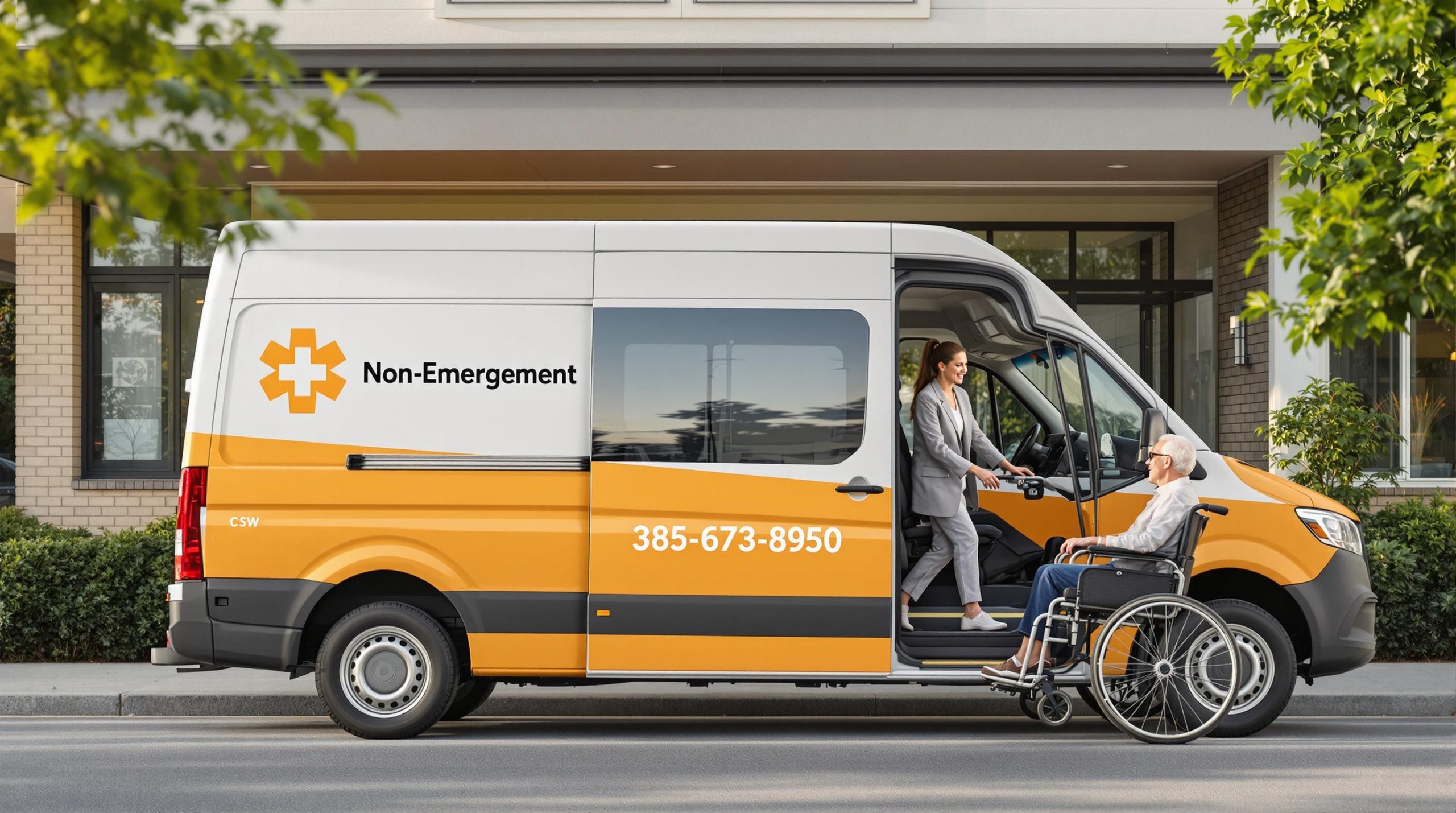
Geographic location influences rates due to factors like road quality, urban versus rural settings, theft rates, and accident statistics. Operating in urban areas typically leads to higher premiums due to increased risks.
Fleet size affects costs, as the higher the number of vehicles, the higher the chances of accidents regardless of driver experience. Claims history plays a major role—a clean record can lead to significant savings, with some providers seeing 20% reductions in annual premiums by implementing strong safety measures.
Reducing Insurance Costs
While opting for minimum required coverage saves on premiums, this approach leaves your business vulnerable to significant financial risks. Instead, focus on strategies that reduce premiums while maintaining adequate protection.
Implement comprehensive driver screening and training programs. Maintain detailed driver logs and safety records. Install GPS tracking and dash cameras to document incidents. Implement regular vehicle maintenance programs to prevent accidents caused by mechanical failure.
Bundle multiple insurance types with a single provider for potential discounts. Consider higher deductibles to lower premiums if you have sufficient reserves. Maintain continuous coverage without gaps, as lapses increase future premiums. Join industry associations that offer group insurance rates.
Many insurers offer discounts for businesses operating for three years or more, prior livery experience, paying policies in full upfront, and maintaining multiple policies with the same provider.
Step 6: Acquire and Equip Your Fleet
Your vehicles represent both your largest capital investment and the core of your service delivery. Careful selection ensures reliability, safety, and profitability.
Determining Fleet Needs
Start by assessing what services you’ll offer and which vehicles support those services. Type of services offered determines whether you need wheelchair accessible vans, stretcher-capable vehicles, standard passenger vans, or specialized medical transport vehicles.
Consider starting with a single vehicle if capital is limited. Starting with one vehicle and using your personal van or a rental for ambulatory NEMT keeps initial investment low. This allows you to test the market, develop relationships, and generate revenue before expanding.
As you grow, diversify your fleet to serve different patient needs. A mixed fleet might include standard passenger vans for ambulatory patients, wheelchair-accessible vans with ramps or lifts, vehicles equipped with stretcher capabilities, and bariatric vehicles for larger passengers.
Vehicle Selection Criteria
Select vehicles that meet patient needs and comply with safety standards and regulations. Consider wheelchair accessibility requirements, stretcher capacity if offering that service, comfort features for passengers spending significant time in transit, fuel efficiency to control operating costs, and maintenance reliability to minimize downtime.
Regular vans transport ambulatory patients, while wheelchair vans accommodate manual and electric wheelchairs with ramps or hydraulic lifts. Stretcher vans provide transportation for those requiring medical monitoring during transit.
Minivans, passenger vans, and SUVs are among the most common vehicles used for non-emergency medical transportation. Many insurers have requirements regarding vehicle age and seating capacity—vehicles older than 10 years or exceeding certain seat capacities may face coverage challenges.
Avoid vehicles equipped with lightbars, sirens, and life support equipment including oxygen tanks, as these are typically prohibited under NEMT insurance and suggest emergency rather than non-emergency service.
Purchase Versus Lease Decisions
Decide whether to purchase or lease vehicles based on your financial situation and business strategy. Purchasing vehicles offers eventual ownership and equity building, no mileage restrictions, and freedom to customize extensively. However, it requires significant upfront capital and you bear all depreciation costs.
Leasing reduces initial capital requirements, allows upgrading to newer vehicles regularly, and often includes maintenance packages. However, you face mileage restrictions, don’t build equity, and have less customization freedom.
For startups with limited capital, leasing one or two vehicles while saving to purchase might provide the best balance.
Essential Vehicle Equipment
Equip vehicles with necessary safety and medical equipment. GPS navigation systems enable efficient routing and real-time location tracking. Two-way communication equipment keeps drivers connected with dispatchers. Wheelchair securements, ramps, and lifts must meet safety standards. First aid kits should be stocked and regularly inspected.
Fire extinguishers must be easily accessible. Stretchers or gurneys if offering that service need secure mounting systems. Personal protective equipment including masks and gloves protects drivers and passengers. Sanitization supplies for cleaning between passengers prevent disease transmission.
Consider comfort features like climate control, smooth suspension, and accessible seating to improve the passenger experience and differentiate your service.
Step 7: Implement Technology and Software Solutions
Modern NEMT businesses rely heavily on technology for scheduling, routing, billing, and communication. Investing in the right systems from the start creates efficiency and scalability.
NEMT Scheduling and Dispatch Software
Specialized NEMT software solutions streamline operations and reduce administrative burden. Key features to seek include automated scheduling that matches rides with available drivers based on location, timing, and vehicle requirements; route optimization that creates efficient multi-stop routes minimizing drive time and fuel costs; real-time driver tracking through GPS integration; automated passenger notifications via text or phone; electronic trip sheets replacing paper documentation; billing integration that tracks services for accurate invoicing; compliance reporting to meet state and payer requirements; and mobile driver apps allowing real-time schedule updates and turn-by-turn navigation.
Leading NEMT software providers include RouteGenie, MediRoutes, Tobi, Upper, and others specifically designed for medical transportation. These platforms handle more trips with fewer dispatchers, improving operational efficiency significantly.
Leveraging NEMT software and AI tools can reduce operational costs by up to 30% and improve efficiency. Route optimization alone can significantly reduce fuel expenses while allowing you to serve more customers with the same fleet.
Communication Systems
Reliable communication between dispatchers, drivers, and passengers is essential. Implement professional phone systems with features like call recording for quality assurance, automated reminders reducing no-shows, multi-line capabilities handling call volume during peak times, and voicemail for after-hours inquiries.
Consider HIPAA-compliant messaging platforms for communicating protected health information. Many NEMT software solutions include integrated communication features eliminating the need for separate systems.
Financial and Billing Systems
Implement accounting software to track income, expenses, and profitability accurately. QuickBooks, FreshBooks, or industry-specific solutions integrate with NEMT dispatch software. Key capabilities include invoicing different payer types like Medicaid, Medicare, private insurance, and self-pay patients; expense tracking categorizing costs appropriately; payroll processing if you have drivers; tax preparation support, and financial reporting providing insights into business performance.
Proper financial systems are essential for getting paid by Medicaid and insurance companies, which often have specific billing requirements and documentation needs.
Website and Online Presence
Create a professional website that serves as your business’s digital storefront. Essential elements include clear service descriptions explaining what you offer, online booking capabilities if feasible, contact information prominently displayed, service area maps, insurance and certification documentation building credibility, and patient testimonials demonstrating reliability.
Ensure your website is mobile-friendly since many potential customers will access it via smartphones. Basic SEO optimization helps people in your area find you when searching for medical transportation services.
Step 8: Hire and Train Quality Staff
Your team represents your business to every customer. Hiring compassionate, reliable staff and training them properly creates the foundation for excellent service and business growth.
Recruitment Strategy
Define clear job requirements before beginning recruitment. For drivers, establish minimum qualifications including valid driver’s license with clean driving record, background check clearance, drug screening compliance, physical ability to assist passengers, and appropriate interpersonal skills.
Recruit through multiple channels including online job boards, local community colleges with healthcare or transportation programs, retirement communities where individuals might seek part-time work, existing NEMT businesses where you might attract experienced drivers, and referrals from current employees.
Medical transport drivers need people skills and compassion, not just driving skills. Look for individuals genuinely interested in helping others who demonstrate patience, reliability, and professionalism.
Essential Training Programs
Provide comprehensive training even for experienced drivers. Comprehensive programs should cover safe vehicle operation including defensive driving techniques, passenger assistance for loading/unloading and mobility device operation, customer service emphasizing compassion and professionalism, HIPAA compliance since drivers handle protected health information, emergency procedures for medical situations or vehicle problems, route optimization and technology use, infection control and sanitation procedures, and cultural sensitivity when working with diverse populations.
Train drivers to learn how to load and unload passengers, drive defensively, maintain schedule punctuality, communicate effectively with dispatchers and passengers, and document trips properly.
Many successful NEMT businesses provide ongoing training, not just initial orientation. Regular refresher courses and safety meetings keep skills sharp and reinforce best practices.
Employee Retention
The NEMT industry faces significant driver turnover challenges. Retaining quality staff saves recruitment and training costs while ensuring consistent service quality.
Competitive compensation helps attract and retain good drivers, though compensation alone isn’t sufficient. Fair scheduling that respects work-life balance, recognition programs acknowledging excellent performance, clear advancement paths showing growth opportunities, respectful treatment, and investment in driver success through training and quality equipment all contribute to retention.
Remember that your drivers interact directly with vulnerable patients. Their professionalism and compassion directly impact your reputation and business success.
Step 9: Develop Marketing and Client Acquisition Strategies
Even the best-equipped NEMT business fails without customers. Strategic marketing attracts initial clients and builds sustainable referral networks.
Identifying Target Customers
Your marketing approach depends on your primary customer segments. Direct consumer marketing targets individuals who self-pay or use Medicaid benefits, while B2B marketing focuses on healthcare facilities, insurance companies, and other organizations referring patients.
Understanding who pays for rides shapes your marketing strategy. Medicaid contracts often provide steady volume. Private insurance referrals require different relationships. Self-pay customers need different messaging than institutional referrals.
Building Healthcare Partnerships
Healthcare facility partnerships provide consistent referral volume. Target hospitals and medical centers, dialysis centers with patients needing regular transportation, cancer treatment facilities, rehabilitation centers, physical therapy practices, senior living communities and nursing homes, assisted living facilities, and home healthcare agencies.
Approach these organizations professionally with materials demonstrating your reliability, insurance coverage, driver training, and service quality. Emphasize how partnering with you solves their patients’ transportation challenges.
Securing Medicaid and Medicare Contracts
Many states contract with transportation brokers who manage Medicaid transportation. Research your state’s system and application process. Getting Medicaid contracts requires meeting specific requirements, maintaining proper insurance and certifications, demonstrating operational capacity, and often accepting lower reimbursement rates than private pay.
Despite lower rates, Medicaid contracts provide volume and predictability, making them valuable for new businesses needing to fill schedules. The process of becoming an approved Medicaid provider varies by state and can take several months.
Local Marketing Tactics
Build local awareness through multiple channels. Develop a strong online presence with a professional website, Google Business Profile, and social media presence on platforms like Facebook where your demographic audience is active.
Implement local SEO strategies targeting searches like “medical transportation [your city]” or “wheelchair van service near me.” Create location-specific content on your website.
Use traditional marketing including direct mail to senior communities, flyers in medical offices and pharmacies, local newspaper advertising, community event sponsorship, and partnerships with senior centers and disability advocacy organizations.
Network extensively within the healthcare community. Attend local medical conferences, join Chamber of Commerce, participate in healthcare professional networking groups, and volunteer at health-related community events.
Leveraging Testimonials and Referrals
Satisfied customers become your best marketers. Actively collect testimonials from patients and family members, sharing them on your website and marketing materials. Video testimonials carry particular impact.
Implement a referral program rewarding existing customers who bring new business. The personal recommendation from someone who used your service carries more weight than any advertisement.
Monitor and respond to online reviews on Google, Yelp, and healthcare rating sites. Address negative reviews professionally and promptly while thanking those who leave positive feedback.
Digital Marketing Strategies
Beyond basic online presence, consider paid advertising including Google Ads targeting specific medical transportation searches, Facebook ads reaching demographics like seniors and caregivers, remarketing campaigns to website visitors who didn’t book, and local service ads appearing prominently in search results.

Content marketing establishes expertise and improves SEO. Create blog posts addressing common questions like “how to prepare for medical transportation” or “what to expect from NEMT services.” Develop guides for caregivers about transportation options for elderly parents.
Email marketing nurtures relationships with past customers and referral sources. Send newsletters with health tips, appointment reminders, and service updates.
Step 10: Launch and Scale Your Business
With all preparation complete, you’re ready to launch operations and begin serving customers. Starting small and scaling strategically maximizes your chances of sustainable success.
Soft Launch Strategy
Consider a soft launch before full-scale operations. Start by offering services to a limited service area, accepting a manageable number of daily trips, focusing on one or two customer segments, and operating with a single vehicle and minimal staff.
This approach allows you to refine operations, identify and fix problems before scaling, build positive reviews and testimonials, generate revenue while managing costs, and gain experience without overwhelming yourself.
Operate out of your home if possible during the initial phase, avoiding office rental expenses. See if friends and family would be willing to help with management and behind-the-scenes work so you can focus on building relationships with clients and completing trips.
Monitoring Key Performance Indicators
Track metrics that indicate business health and guide decision-making. Important KPIs include on-time performance percentage, customer satisfaction scores, vehicle utilization rates, revenue per trip, cost per mile, no-show rates, driver retention rates, and customer acquisition cost.
Regular monitoring helps identify problems early. For example, declining on-time performance might indicate scheduling issues, while falling customer satisfaction could suggest training needs.
Scaling Strategically
As your business grows, scale thoughtfully. Add vehicles and drivers based on demonstrated demand rather than speculation. Expand service area gradually, ensuring you maintain quality in new territories.
Diversify services once core operations are solid. If you started with ambulatory transport, consider adding wheelchair-accessible vehicles. If focused on Medicaid, pursue private insurance contracts.
Investment in better technology, facility space, and administrative staff comes as revenue supports these expenses. Hiring a dedicated dispatcher allows you to focus on business development rather than daily operations.
Maintaining Quality During Growth
Rapid growth challenges service quality. Maintain standards by preserving hiring and training rigor even when needing drivers quickly, implementing quality control systems that catch problems early, staying personally involved in operations even as the business grows, maintaining the same commitment to customer service, and regularly soliciting feedback from customers and staff.
Many NEMT businesses fail not from lack of demand but from inability to deliver consistent quality as they scale. Your reputation—built one trip at a time—represents your most valuable asset.
Ensuring Compliance and Risk Management
Operating a medical transportation business involves ongoing compliance with numerous regulations and proactive risk management.
Staying Current with Regulations
Regulations governing NEMT change regularly at federal, state, and local levels. Stay informed through industry associations, subscribing to regulatory updates from your state transportation and health departments, attending industry conferences and workshops, joining NEMT trade associations that provide compliance resources, and working with legal counsel specializing in transportation or healthcare.
Ignorance of regulatory changes doesn’t excuse violations. Build compliance monitoring into your regular business operations.
HIPAA Compliance
Medical transportation involves handling protected health information, making HIPAA compliance essential. Drivers learn patients’ medical conditions, appointments, and healthcare providers. This information must be protected.
Implement HIPAA compliance programs including staff training on privacy requirements, secure systems for storing and transmitting patient information, signed business associate agreements with healthcare partners, policies restricting unnecessary disclosure, and incident response plans for potential breaches.
HIPAA violations carry steep fines and damage your reputation. Take privacy seriously from day one.
Safety and Risk Management
Proactive safety programs protect passengers, staff, and your business. Key elements include regular vehicle maintenance and inspections, driver safety monitoring and coaching, incident investigation and corrective action processes, safety committees reviewing practices, and continuous improvement based on lessons learned.
Document everything. Detailed records of training, vehicle maintenance, incident reports, and safety measures protect you in disputes and demonstrate your commitment to best practices.
Insurance Claims Management
Despite best efforts, accidents happen. When they do, proper claims management minimizes financial impact and protects your business. Report all incidents to your insurer immediately regardless of fault or severity. Document thoroughly with photos, witness statements, and detailed narrative. Cooperate fully with insurance investigations. Don’t admit fault at accident scenes—provide facts to insurers who determine liability.
Working with insurance providers who understand NEMT and provide strong claims support makes difficult situations more manageable.
Overcoming Common Challenges
Starting any business presents challenges. Understanding common NEMT industry obstacles helps you prepare and overcome them.
Cash Flow Management
Many NEMT businesses struggle with cash flow because payment delays are common. Medicaid might take 30-90 days to reimburse. Insurance companies have their own payment timelines. Self-pay customers might be slow to settle bills.
Maintain adequate working capital to cover expenses during payment gaps. Implement billing best practices to accelerate payment. Consider invoice factoring for Medicaid receivables if cash flow becomes critical.
Competition and Pricing
The NEMT market attracts new entrants constantly. While growing demand accommodates many providers, competition for contracts and customers remains fierce. Differentiate through superior service quality, specialized capabilities, and strong relationships rather than competing solely on price.
Undercutting competitor prices might win initial business but isn’t sustainable if it doesn’t cover your costs and provide reasonable profit. Focus on value, not just price.
Regulatory Compliance Burden
Keeping up with licensing, insurance, vehicle requirements, and documentation can feel overwhelming, especially when regulations vary by location and change frequently. Invest in systems and processes that make compliance routine rather than reactive.
Consider hiring compliance specialists or consultants as you grow. The cost is minor compared to fines, license suspensions, or legal problems.
Driver Recruitment and Retention
Finding and keeping quality drivers remains one of the industry’s biggest challenges. Drivers notoriously arrive late, show disinterest, or never show up at all. This awful reputation proves there’s a huge gap in the market for responsible, caring individuals to make money and do good.
Differentiate your company as an employer through fair pay, respectful treatment, and investment in driver success. Your reputation for quality drivers becomes a competitive advantage.
Scaling Without Sacrificing Quality
Growing from one vehicle to a fleet, from owner-operated to managed business, and from local to regional coverage challenges even successful businesses. Systems that worked with three drivers break down with thirty.
Scale deliberately with processes and systems that support larger operations. Many successful NEMT owners recommend growing to 3-5 vehicles profitably before the next expansion phase.
The Future of Medical Transportation
Understanding industry trends helps position your business for long-term success in an evolving market.
Technology Integration
Technology continues transforming NEMT operations. Rideshare-based non-emergency medical transportation systems play an increasingly important role in providing accessible and cost-effective transportation. Some ridesharing companies explore entering the NEMT market, though regulations and specialized requirements create barriers.
Augmented reality applications for patient education, AI-powered dispatch optimization, and advanced telematics all represent emerging technologies affecting the industry.
Value-Based Care Alignment
Healthcare’s shift toward value-based care creates opportunities for NEMT providers demonstrating how reliable transportation improves health outcomes. Providers who can document reduced hospital readmissions, better medication adherence, and improved chronic disease management through reliable transportation access can command premium contracts.
Partnerships and Consolidation
The NEMT industry shows signs of consolidation with larger companies acquiring smaller operators. However, room remains for independent operators providing excellent local service. Some businesses explore partnerships or franchise models for growth.
Sustainability Focus
Environmental considerations increasingly influence transportation decisions. Electric and hybrid vehicles gain traction in medical transportation fleets. While upfront costs remain higher, operating expenses and environmental benefits appeal to socially conscious healthcare partners.
Expanded Service Integration
Forward-thinking NEMT businesses expand beyond basic transportation to integrated services including care coordination, appointment scheduling assistance, medication delivery, and wellness checks during transport. These value-added services differentiate providers and justify premium pricing.
Frequently Asked Questions
Q: How much money do I need to start a medical transportation business?
A: Startup costs vary significantly based on your scale and approach. If starting with a single vehicle and using your personal van or rental for ambulatory NEMT, costs can be as low as $4,000-$5,000 covering business registration, legal fees, insurance, permits, basic equipment, and initial marketing. More typical startups with purchased vehicles, proper facility, and comprehensive setup range from $50,000 to $150,000 or more.
Major expense categories include vehicle purchase ($30,000-$60,000 per vehicle), insurance ($2,000-$12,000 per vehicle annually), licensing and permits (varies by state), technology and software ($1,000-$5,000), marketing ($2,000-$10,000), and working capital for 6 months of operating expenses. Start small with one vehicle and scale as revenue grows to minimize initial investment while testing the market.
Q: Do I need special certifications or medical training to start a NEMT business?
A: No, NEMT drivers are not considered medical professionals and don’t need the same certifications as emergency responders, which can be expensive and time-consuming to acquire. NEMT drivers only need a valid driver’s license and a clean driving record. However, you’ll need proper business licensing and NEMT provider certifications varying by state.
While not always required, additional certifications like CPR, First Aid, defensive driving, and passenger assistance training strengthen your credibility and service quality. You’ll also need HIPAA compliance training since drivers handle protected health information. The focus is on safe driving, compassionate customer service, and reliable transportation rather than medical expertise.
Q: How long does it take to start making money in the NEMT business?
A: Timeline varies considerably based on your market, preparation, and effort. If you have proper licensing, insurance, vehicles, and initial client relationships in place, you could start generating revenue within your first month. However, building sustainable, profitable operations typically takes 6-12 months. Initial challenges include establishing relationships with healthcare facilities and referral sources, getting approved as Medicaid provider (which can take several months), building reputation and word-of-mouth referrals, and refining operations for efficiency.
Many owners report breaking even within 6-9 months and achieving solid profitability by 12-18 months. Starting part-time while maintaining other income can reduce financial pressure during the ramp-up period.
Q: Is the NEMT business actually profitable, or is it too competitive?
A: Yes, NEMT businesses can be quite lucrative when operated efficiently. The industry offers constant demand, relatively low startup costs compared to other healthcare businesses, and high profit margins with premium rates for specialized services.
The market generated $9.16 billion in 2024 and continues growing steadily. However, profitability requires excellent operations, cost control, competitive pricing, and quality service. While competition exists, many areas remain underserved, particularly for specialized services like wheelchair accessible transport or reliable service with compass


