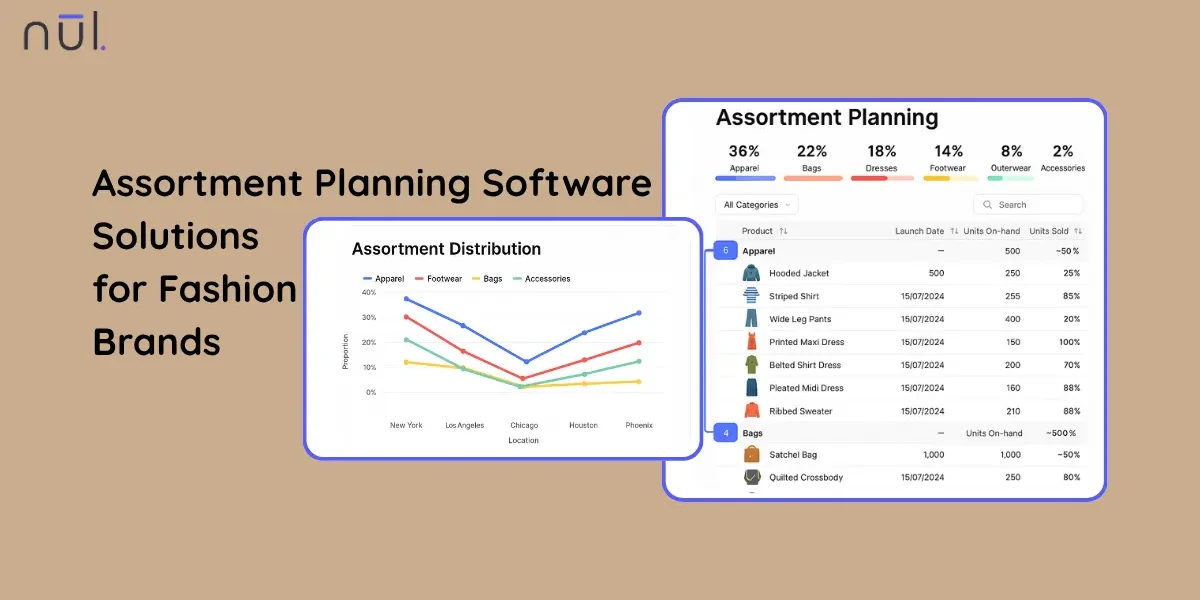

In today’s dynamic fashion landscape, building the perfect product assortment has become both an art and a science. Retailers must navigate shifting consumer preferences, compressed trend cycles, and intensified competition while maintaining profitability. Assortment planning in fashion has emerged as a critical differentiator between retailers who thrive and those who struggle.
What Makes Fashion Assortment Planning Unique
Fashion assortment planning differs fundamentally from other retail categories due to the industry’s inherent characteristics. Seasonality creates natural buying cycles with distinct spring, summer, fall, and winter collections. Trend volatility means what’s popular today may be irrelevant in six months. Style variability across silhouettes, fabrications, colors, and details multiplies complexity exponentially.
The emotional nature of fashion purchases adds another layer. Customers buy clothing to express identity, boost confidence, and signal belonging. This means assortment decisions carry psychological weight beyond functional considerations. A technically perfect assortment that fails to inspire emotional connection will underperform.
Size and fit challenges create operational complexity unique to apparel. Unlike books or electronics, fashion requires maintaining multiple sizes per style, often across eight to twelve size runs. This multiplies inventory investment and markdown risk while making demand forecasting more difficult.
Strategic Frameworks for Assortment Development
Effective assortment planning requires a strategic framework that aligns product selection with business objectives. Customer-centric planning starts with deep segmentation, identifying distinct shopper groups with different needs, preferences, and behaviors. A millennial professional shopping for workwear has entirely different requirements than a Gen Z college student seeking weekend casual styles.
Your assortment architecture should map directly to these customer segments. This might mean dedicating specific categories or shop concepts to different groups, ensuring each finds relevant products easily. The alternative—trying to please everyone with a generic assortment—typically pleases no one.
Competitive differentiation must be baked into your planning process. Analyze competitor assortments to identify gaps and opportunities. Where are they overrepresented? What categories or price points are underserved? Your assortment should exploit these whitespaces while avoiding head-to-head battles in oversaturated segments.
Financial guardrails provide essential discipline. Before creative work begins, establish clear parameters including total investment budgets, margin requirements, and inventory turn targets. These constraints force prioritization and prevent overextension. The best creative teams view these boundaries not as limitations but as focusing mechanisms.

Balancing Width, Depth, and Lifecycle
Three fundamental dimensions define every fashion assortment. Width refers to the number of distinct categories or product types offered. A wide assortment might span dresses, tops, bottoms, outerwear, activewear, and accessories. Narrow assortments focus intensely on fewer categories, potentially just denim or athleisure.
Depth indicates how many variations exist within each category. A deep assortment of button-down shirts might include twelve different styles in eight colors and full size runs. Shallow depth offers fewer choices but broader category coverage. Neither approach is inherently superior—the right balance depends on your market position and customer expectations.
Lifecycle management determines how long products remain in the assortment. Core basics might be permanent, restocked continuously with minimal changes. Fashion items have limited windows, often selling for just one season. Transitional pieces bridge seasons and categories. The optimal mix typically includes a foundation of never-out-of-stock basics, a substantial layer of seasonal fashion items, and a smaller collection of trend-driven statement pieces.
Leveraging Analytics and Consumer Insights
Data analytics has revolutionized how sophisticated retailers approach assortment planning. Sales analysis reveals which styles, categories, colors, and price points resonate with customers. Look beyond simple sales totals to understand sell-through rates, full-price sell-through, and time-to-sell metrics. These indicators expose both winners and losers in your current assortment.
Customer analytics illuminate who’s buying what. Segment analysis shows whether different customer groups have distinct preferences. Geographic analysis reveals whether product performance varies by location. Demographic analysis indicates whether age, income, or lifestyle factors correlate with purchase patterns. These insights enable targeted assortments rather than one-size-fits-all approaches.
Market intelligence extends beyond your own four walls. Monitor social media conversations to identify emerging trends before they hit mainstream. Track search behavior to understand what customers are seeking. Analyze competitive pricing and promotional activity to contextualize your performance. The best assortment plans synthesize internal data with external market signals.
Testing methodologies reduce risk in uncertain decisions. Rather than committing fully to untested concepts, introduce them in limited distributions and measure response. A pilot program in twenty stores provides valuable learning at a fraction of the risk. Digital channels enable even more flexible testing, with the ability to A/B test different product presentations or assortment mixes.
Merchandise Mix Optimization Techniques
Successful retailers employ sophisticated approaches to optimize their merchandise mix across multiple variables. Category analysis identifies which product groups deserve more or less investment. Apply portfolio thinking—some categories drive traffic, others deliver margin, while staples provide consistent base volume. Your assortment should balance these roles rather than expecting every category to perform identically.
Price point engineering shapes customer perceptions and drives profitability. Most successful retailers create deliberate price ladders with clearly differentiated good-better-best offerings. Entry price points attract price-sensitive customers and enable trial. Mid-tier prices represent your core volume. Premium prices enhance brand perception and capture customers willing to pay for superior quality or style.
The distribution across these tiers matters enormously. Many retailers find success with a pyramid structure, offering broad selections at opening price points, substantial mid-tier assortments, and curated premium collections. This structure maximizes accessibility while maintaining aspiration.
Color strategy influences both aesthetic cohesion and commercial performance. Develop seasonal color palettes that create visual harmony across your assortment while incorporating trend colors that signal newness. Most retailers find that neutral colors drive volume while fashion colors generate excitement. A balanced palette includes both, allowing customers to build cohesive wardrobes while expressing personality.
Fabrication planning ensures appropriate offerings for season and occasion. Spring/summer assortments emphasize lightweight, breathable fabrics while fall/winter focuses on warmth and texture. Consider fabric innovation as a differentiation opportunity—performance features or sustainable materials can command premium pricing and build brand loyalty.
Cross-Channel Assortment Orchestration
Modern retail demands coordinated assortment strategies across multiple channels, each with distinct characteristics and customer expectations. Physical retail offers tangible experiences but faces space constraints. E-commerce enables unlimited virtual shelf space but lacks tactile interaction. Mobile commerce prioritizes convenience and simplified navigation. Social commerce blends inspiration with transaction.
Smart retailers develop tiered assortment strategies that optimize for channel strengths. Stores might focus on hero products that showcase brand aesthetic and encourage try-on, supplemented by strong basics programs. Online channels carry extended assortments including additional sizes, colors, and styles that don’t justify physical space.
Exclusive products can drive channel-specific traffic. Online exclusives reward digital shoppers and leverage unlimited virtual space. Store exclusives create reasons to visit physical locations. The key is ensuring these exclusives enhance rather than fragment the overall brand experience.
Inventory architecture supports channel strategies while maximizing efficiency. Unified inventory pools enable flexible fulfillment—ship from store, buy online pickup in store, and endless aisle capabilities. However, this flexibility requires sophisticated allocation algorithms that balance availability across channels without overinvesting in inventory.
Supplier Collaboration and Sourcing Strategies
Assortment planning extends beyond internal decision-making to include strategic supplier partnerships. Vendor selection should consider not just product and pricing but also capabilities alignment. Can they support your lead time requirements? Do they offer the flexibility for reorders or late-stage customization? Can they meet your quality and sustainability standards?
Sourcing mix balances risk and opportunity. Branded merchandise offers proven consumer appeal and reduced development risk but typically carries lower margins and limits differentiation. Private label delivers higher margins and exclusivity but requires greater development investment and market risk. Most retailers optimize with a strategic blend.
Geographic sourcing diversification reduces supply chain vulnerability. Over-dependence on single countries or regions creates exposure to trade disputes, natural disasters, or political instability. A balanced sourcing strategy spreads manufacturing across multiple locations while considering total landed cost, not just unit price.
Lead time management has become increasingly critical in fast-moving fashion markets. Long lead times require committing to styles and quantities far in advance, increasing forecast risk. Near-shore or on-shore production enables responsiveness but often at higher cost. The optimal strategy typically involves a foundation of early commitments on proven basics with reserved capacity for quick-turn reactive buying.

Risk Management in Assortment Planning
Every assortment decision involves risk—the risk of overstocking items that don’t sell and the risk of understocking items that do. Sophisticated risk management doesn’t eliminate these risks but calibrates them appropriately. Risk tolerance varies by product category. Core basics with predictable demand justify conservative planning and higher stock levels. Fashion-forward items with uncertain demand call for measured bets and lower initial buys.
Buy strategy determines your risk exposure. An initial buy that commits 100% of expected demand leaves no flexibility. A split buy that commits 60-70% initially with reserved fabric or capacity for reorders provides responsiveness while maintaining financial discipline. The premium paid for this flexibility often pays for itself through reduced markdowns and captured upside.
Style testing reduces risk on unproven concepts. Rather than betting heavily on untested silhouettes, colors, or price points, introduce them in limited quantities and locations. Success warrants expansion while failures remain contained. This test-and-learn approach transforms assortment planning from high-stakes gambling to managed experimentation.
Markdown mitigation strategies acknowledge that some level of clearance is inevitable in fashion retail. Build markdown allowances into financial plans rather than treating all markdowns as failures. Focus on minimizing markdown rates on core seasonal goods while accepting higher rates on fashion-forward items. The goal isn’t zero markdowns but rather profitable sell-through across the full assortment.
Organizational Structure and Workflow
Effective assortment planning requires cross-functional collaboration. Merchandising leads the process, making final decisions on style selection and quantity planning. Design brings creative vision, developing concepts that excite customers while aligning with brand aesthetic. Planning provides analytical support, forecasting demand and optimizing inventory investment.
Marketing ensures assortments support promotional calendars and brand communications. Operations confirms assortments can be received, allocated, and presented effectively. Finance validates that plans deliver margin and turn objectives. When these functions work in silos, assortments suffer from disconnects and missed opportunities.
Timeline discipline keeps complex processes on track. Establish clear milestones for each planning phase including concept development, line review, buy quantity setting, and order placement. Build in checkpoints for cross-functional alignment. Document decisions and rationale so teams understand why specific choices were made.
Communication rhythms maintain alignment as situations evolve. Regular planning meetings review progress against timelines and address emerging issues. Weekly or biweekly business reviews assess current season performance and inform future planning. Annual strategic reviews establish frameworks for the year ahead.
Performance Measurement and Continuous Improvement
Measuring assortment effectiveness requires metrics that capture multiple dimensions of success. Sales productivity indicates revenue generation per unit of inventory or per square foot. High sales productivity suggests efficient assortments that turn quickly. Low productivity signals overcrowding or poor product selection.
Margin realization compares achieved margins to planned targets. Consistent margin achievement indicates accurate pricing and markdown planning. Significant variance suggests pricing errors, promotional pressure, or quality issues requiring markdowns.
Choice satisfaction metrics reveal whether customers find what they’re seeking. High levels of out-of-stocks or frequent customer inquiries about unavailable items suggest insufficient assortment breadth or depth. Conversely, poor sell-through despite adequate stock levels may indicate the wrong assortment entirely.
Post-season reviews transform experience into learning. Analyze both successes and failures to understand contributing factors. Which styles exceeded expectations and why? What categories underperformed and what changes are needed? Capture these insights systematically and incorporate them into future planning cycles.
Emerging Technologies and Innovation
Artificial intelligence is transforming assortment planning capabilities. Machine learning algorithms can analyze vast datasets to identify patterns humans might miss, predict demand with increasing accuracy, and optimize assortments across thousands of variables simultaneously. These tools augment rather than replace human judgment, handling complex calculations while merchants focus on strategic and creative decisions.
Visual merchandising technology enables digital line planning and presentation. Cloud-based platforms allow distributed teams to collaborate on assortment development in real-time. 3D visualization helps stakeholders understand how products will look together before samples exist. These tools accelerate planning cycles and improve decision quality.
Blockchain and transparency platforms are becoming relevant as consumers demand information about product origins and sustainability credentials. Assortment planning increasingly considers not just what products are but how they’re made and the values they represent.
Virtual inventory and made-to-order models represent radical departures from traditional assortment planning. Rather than committing to inventory before demand signals emerge, these approaches produce only what’s actually sold. While not appropriate for all categories, they offer intriguing possibilities for reducing waste and risk.
Sustainability and Ethical Considerations
Environmental consciousness increasingly shapes assortment decisions. Overproduction and excess inventory contribute significantly to fashion’s environmental footprint. Thoughtful assortment planning that matches supply to demand reduces waste. Quality over quantity approaches prioritize durable goods that last multiple seasons over disposable fashion.
Material selection reflects sustainability values. Organic, recycled, or innovative low-impact fabrics signal commitment to environmental responsibility. While these materials sometimes carry cost premiums, many consumers demonstrate willingness to pay for sustainable options.
Circularity models change how retailers think about assortment lifecycles. Rather than viewing products as linear—produced, sold, worn, discarded—circular approaches incorporate resale, rental, repair, and recycling. Assortment planning in circular models considers second-life potential alongside initial sale.
Ethical production practices increasingly influence supplier selection and assortment composition. Consumers and advocates demand transparency about working conditions, fair wages, and safe factories. Forward-thinking retailers integrate these considerations into vendor evaluation and product selection.
Frequently Asked Questions
How do I determine the right number of options to offer in each category?
Start by analyzing historical data to understand how many options customers actually choose from. Often retailers discover that a small percentage of styles drive most sales, suggesting opportunities to reduce complexity.
Consider your market positioning—luxury retailers often succeed with fewer, carefully curated options while mass merchants compete partly on selection breadth. Test different assortment sizes in similar locations to measure impact on sales and customer satisfaction.
What’s the ideal ratio of fashion items to basic items in an assortment?
This depends entirely on your brand positioning and customer base. Fashion-forward retailers might skew 70/30 or even 80/20 toward fashion items, accepting higher markdown risk for the excitement and differentiation these products provide. Classic or basics-focused retailers might invert this ratio. Most contemporary retailers find success around 50/50 to 60/40 fashion-to-basics, providing newness while maintaining stability.
How should I approach assortment planning for a new market or customer segment?
Begin with thorough research—analyze successful competitors, survey target customers, and understand cultural or regional preferences that might affect product acceptance. Start with a focused, test-oriented approach rather than comprehensive assortments.
Launch with hero categories where you have confidence, measure results carefully, and expand based on learning. Accept that some failures are inevitable when entering new markets, and build this reality into financial planning.
What’s the best way to handle seasonal transitions in assortment planning?
Plan transitional periods deliberately rather than treating them as gaps between seasons. Develop products that work across seasons—lightweight layers for late summer, heavier pieces in versatile colors for early fall. Create clear markdown calendars that move seasonal goods out before transition merchandise arrives. Many retailers succeed with a 4-6 week transition period where outgoing and incoming seasons overlap strategically.
How can I improve forecast accuracy for new styles with no sales history?
Use proxy products with similar characteristics as analogs. A new floral print dress might be forecasted based on how similar dresses performed, adjusted for differences in price, style details, or trend strength. Employ attribute-based forecasting that predicts based on style characteristics rather than treating each item as unique. Start with conservative initial buys and use quick-turn reorder capabilities to capture upside while limiting downside.
Should I plan different assortments for different store formats?
Yes, when store formats serve different purposes or customer bases. Flagship stores might justify broader, deeper assortments including exclusive items that drive destination trips. Outlet stores require distinct assortments designed for value pricing. Small-format stores in urban locations need edited selections focused on convenience purchases. However, maintain brand consistency—these should feel like variations of a coherent brand, not unrelated concepts.
How do I balance assortment planning with fast fashion and quick response?
Most successful retailers use a hybrid approach. Plan a foundation assortment through traditional advance planning, covering basics and core seasonal goods. Reserve a portion of your budget and capacity for in-season reactive buys that respond to emerging trends or unexpected successes. The ratio varies by business model—fast fashion retailers might reserve 40-60% for reactive purchases while traditional department stores might allocate 10-20%.
What role should customer feedback play in assortment planning?
Customer feedback provides valuable qualitative insights to complement quantitative sales data. Reviews highlight what customers love and hate about existing products, informing future development. Direct outreach through surveys or focus groups can test concepts before committing to full production. Social media monitoring reveals both positive sentiment and frustrations. However, balance direct feedback with observed behavior—customers don’t always know what they want until they see it.
How do I plan assortments when selling through multiple retail partners?
Develop a tiered product strategy that provides wholesale partners with appropriate assortments while maintaining key items for your direct channels. Create exclusive styles or colorways for major retail partners, ensuring they can differentiate their offerings. Manage distribution carefully to prevent channel conflict—avoid selling identical products at significantly different prices through different channels. Consider timing strategies that give your direct channels early access to key items.
What are the biggest mistakes to avoid in fashion assortment planning?
The most damaging mistakes include planning based solely on your personal taste rather than customer data, overcomplicating assortments with too many marginally different options, ignoring channel-specific needs, failing to edit assortments ruthlessly, not planning for markdowns realistically, and treating all product categories as equally important.
Additionally, many retailers err by either over-indexing on past performance (leading to stale assortments) or ignoring it entirely (resulting in repeated mistakes). The key is balancing historical learning with forward-looking market intelligence.